

Cotton vs. Down Comforter: Which Keeps You Cooler (and Lasts Longer)?
When you compare a cotton vs. down comforter, the right choice depends on more than the fiber name. Cotton fill usually feels flatter and more substantial, while down fill creates a lofty, lightweight layer that holds warmth. Either can be comfortable, but the fill, shell, construction, and care instructions all shape how the comforter feels and how well it holds up.
The quick answer: A lightweight cotton-filled comforter may suit you if you prefer a breathable, less lofty layer. Down may be a better fit if you want more warmth with a lighter feel and are prepared to follow its care requirements. For durability, construction and maintenance matter as much as fill type.
First, Compare the Fill, Not Just the Word “Cotton”
“Cotton comforter” can describe the shell, the fill, or both. Down describes the fill: the soft plumage from ducks or geese used for insulation. A down comforter may have a cotton shell, so comparing “cotton” with “down” without checking the materials can be misleading.
Before you decide, check the product listing for:
- Shell fabric: The outer layer you see and touch.
- Fill material: The insulation inside the comforter.
- Fill weight or warmth options: These help you understand how much coverage and insulation to expect.
- Construction: Stitching or baffles hold the fill in place.
- Care instructions: Cleaning and drying requirements vary by product.
For a deeper breakdown of cotton shell, fill, weave, and construction, visit our 100% Cotton Comforter Buying Guide. This comparison focuses on the practical differences between cotton fill and down.
Which Comforter Sleeps Cooler?
Cotton: A breathable, more grounded feel
Cotton is a natural fiber that allows air to move through the fabric. Cotton fill often has a flatter, denser feel than lofty down, which can appeal if you want a cozy layer without a cloudlike profile. A lightweight construction can work well when you want comfort without a bulky bed.
Cotton does not automatically mean cool, however. A heavy fill or dense shell can still feel warm. Check the comforter’s full specifications rather than relying on a “cotton” label alone.
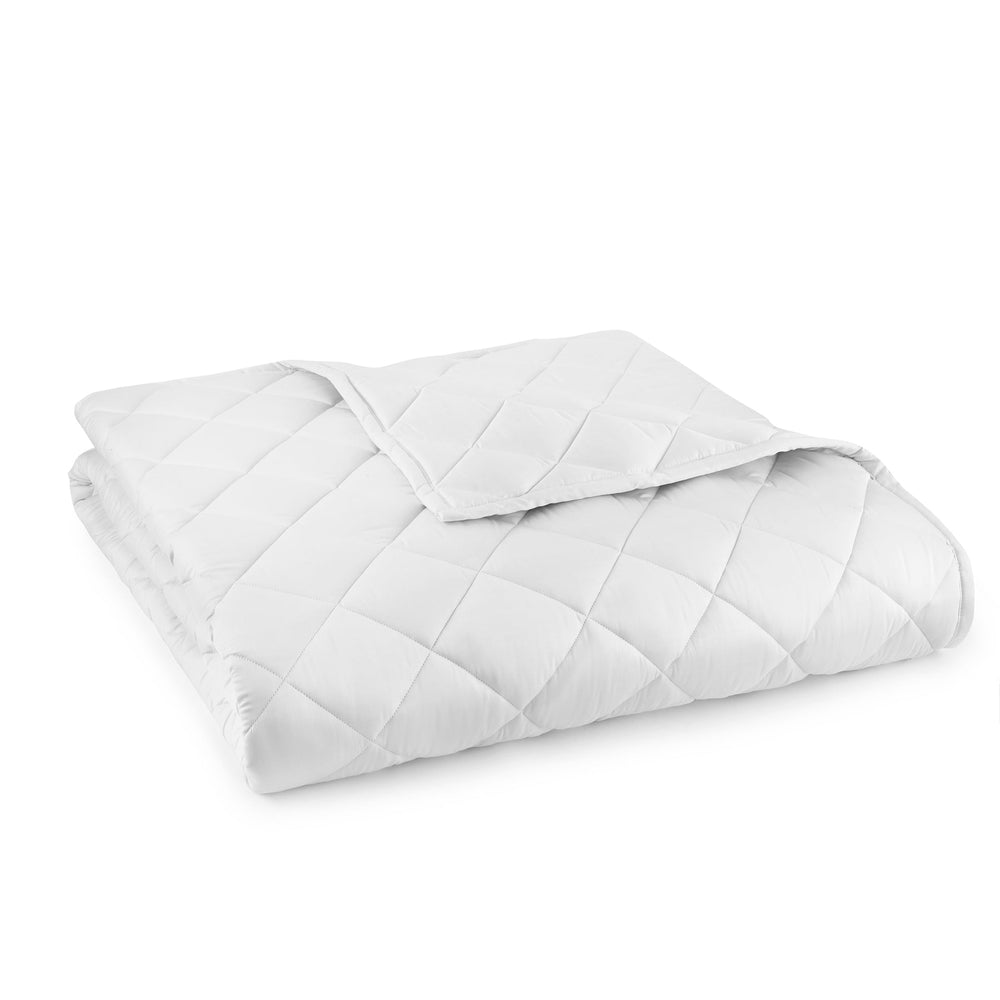
For example, Quahog Bay Bedding’s Organic Cotton Comforter has a 300-thread-count cotton shell, 240 GSM organic cotton fill, and diamond stitching. Its listing describes it as a lightweight option. It is made in India, so it is not an American-made item.
Down: Lightweight loft with strong insulation
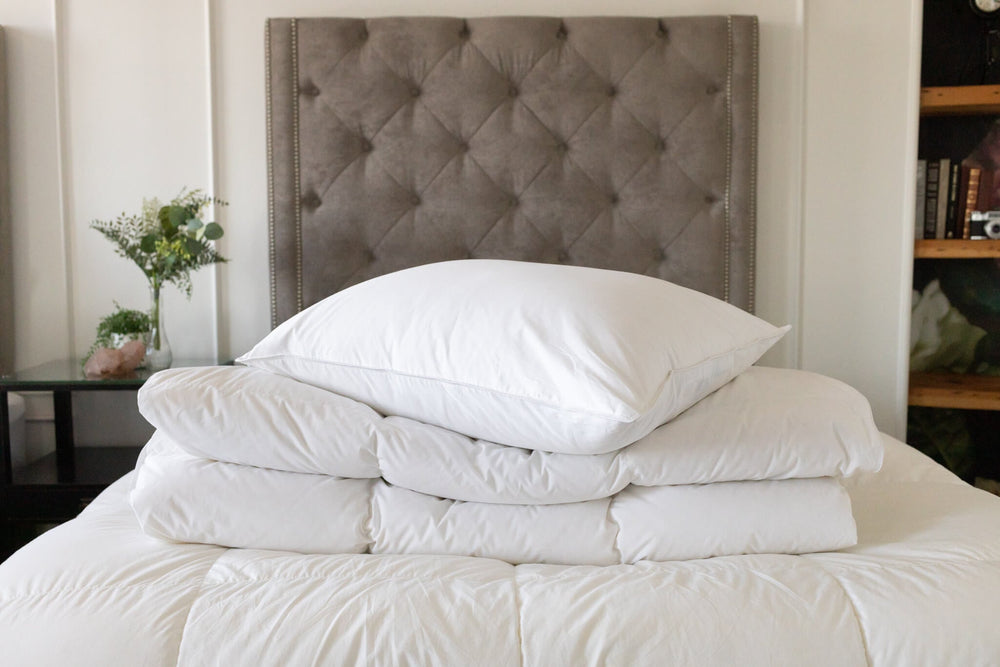
Down clusters trap air, creating loft and insulation without the same dense feel as cotton fill. That can make down appealing if you like a soft, airy comforter that provides warmth without feeling as weighty.
Down is not necessarily too warm for every sleeper. Warmth depends on the amount of fill, the design, and your room and personal preferences. Some down comforters are offered in different weights; a lighter option may suit warmer conditions, while a heavier one provides more insulation. A breathable cotton shell can also influence the feel.
Quahog Bay Bedding’s Harmony Comforter illustrates the difference between shell and fill: it pairs 650+ fill power American duck down with a 300-thread-count cotton cover. It is made locally in the USA and is offered in summer, year-round, and winter weights. Review the listing for current availability and care details.

Which One Lasts Longer?
There is no universal lifespan based on fill alone. A comforter’s materials, shell, stitching, frequency of washing, and care all affect how it wears.
Down can retain its loft over time when it is kept clean and fully dry and handled according to its care instructions. Its delicate fill also calls for care: some down comforters can be washed at home, while others have different cleaning requirements. Always follow the product label. A duvet cover can help protect the comforter from everyday contact and reduce how often the insert needs cleaning.
Cotton is a familiar, durable fiber, but cotton-filled comforters can take longer to dry because the fill holds moisture. Follow the care label, avoid overcrowding the washer or dryer, and use the recommended settings. Cotton fill requires extra low-heat drying cycles to dry thoroughly. Do not substitute high heat for extra drying time.
Neither comforter is automatically the more durable choice. Look for secure stitching that helps keep the fill evenly distributed, and consider whether the care routine fits your household. For more on down construction, warmth, and upkeep, see Sleep Foundation’s down comforter guide.

Cotton vs. Down Comforter: At a Glance
| What matters to you | Cotton fill | Down fill |
|---|---|---|
| Feel | More substantial and typically less lofty | Light, lofty, and airy |
| Warmth | Depends on fill amount and construction | Insulating loft; available warmth depends on weight and construction |
| Cooler feel | A lightweight design may suit you if you prefer less loft | Consider a lighter-weight option if you like loft but need less insulation |
| Care | Check the label; allow extra low-heat drying cycles | Follow the label; care requirements vary by product |
| Long-term use | Careful washing and drying help protect the fill | Careful cleaning and keeping the fill completely dry help preserve loft |
How to Choose for Your Bedroom
Choose a cotton-filled comforter if you prefer a natural, more grounded feel and a less lofty layer. Check the exact shell and fill materials, the listed weight, and the drying instructions before you buy.
Choose a down comforter if you like a soft, lofty bed and want insulation without a dense feel. Compare available weights, shell materials, construction, and care requirements. If American-made bedding matters to you, check the product’s origin information: the Harmony Comforter is made locally in the USA.
If you are still unsure, start with the warmth you want and the care routine you can comfortably maintain. Then compare product details side by side. You can also browse our cotton comforter collection, down comforters, or coastal comforters to find a style that suits your room.
Quahog Bay Bedding brings together carefully curated coastal bedding and American-made options, including hand-finished, made-to-order craftsmanship across select products. Orders ship in 1–2 business days, except made-to-order items; see each listing for its shipping timeline. Free shipping is available in the continental United States.


